

Sustainable monument called for rugby field of concrete
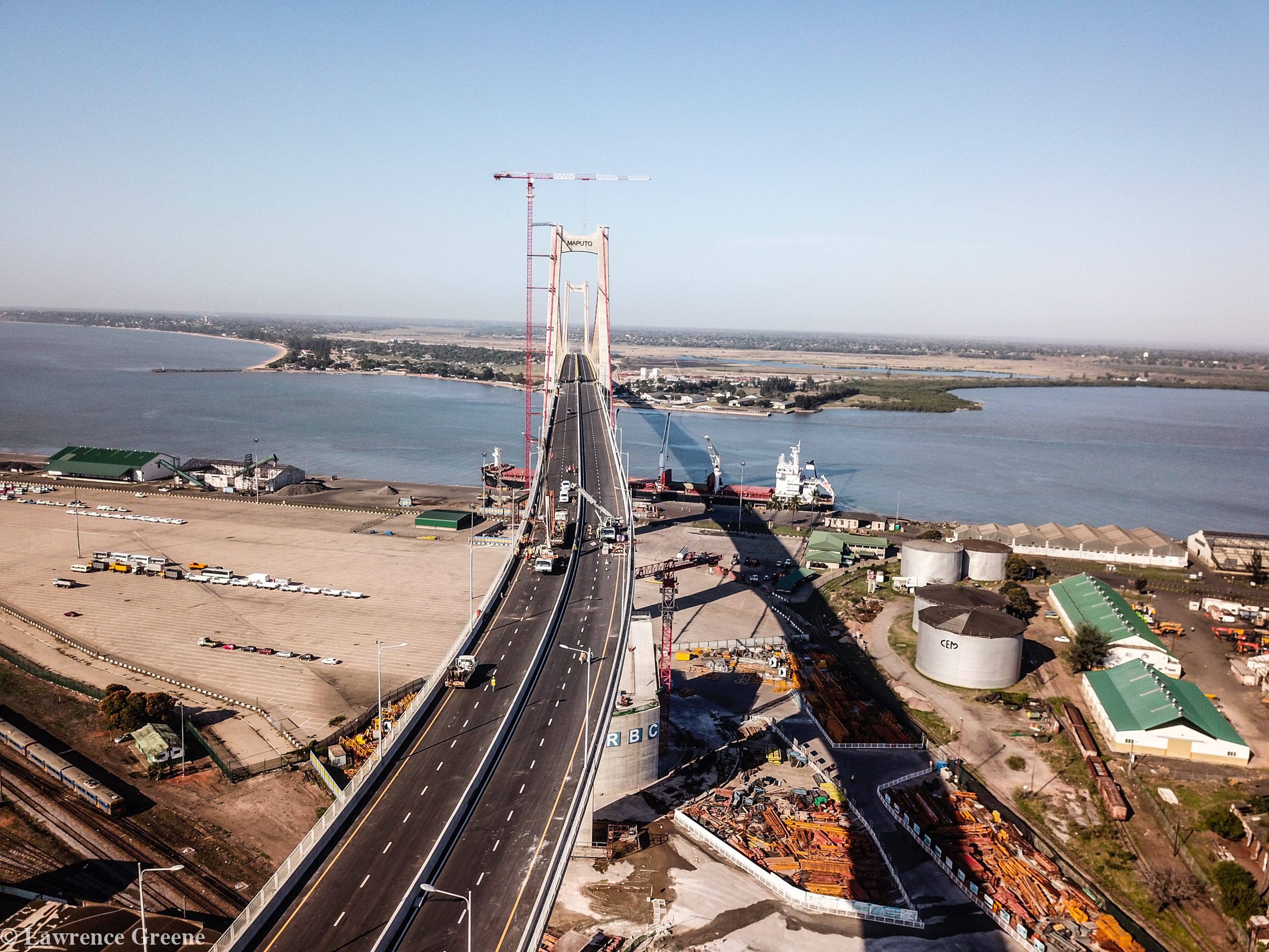
An Exclusive interview by Jan de Beer with the team at GAUFF Engineering in charge of quality control for the construction of the longest suspension bridge in Africa: the amazing Maputo Bridge and North Link Interchange.
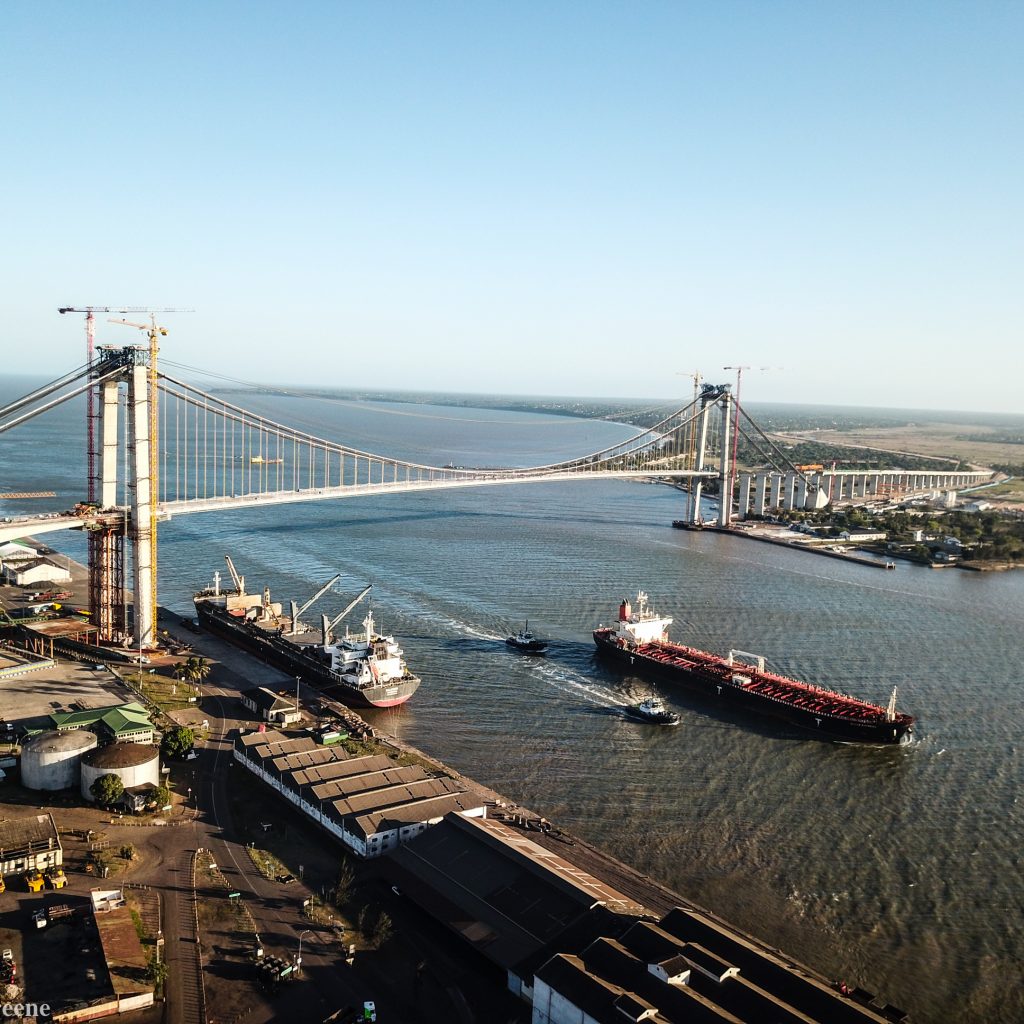
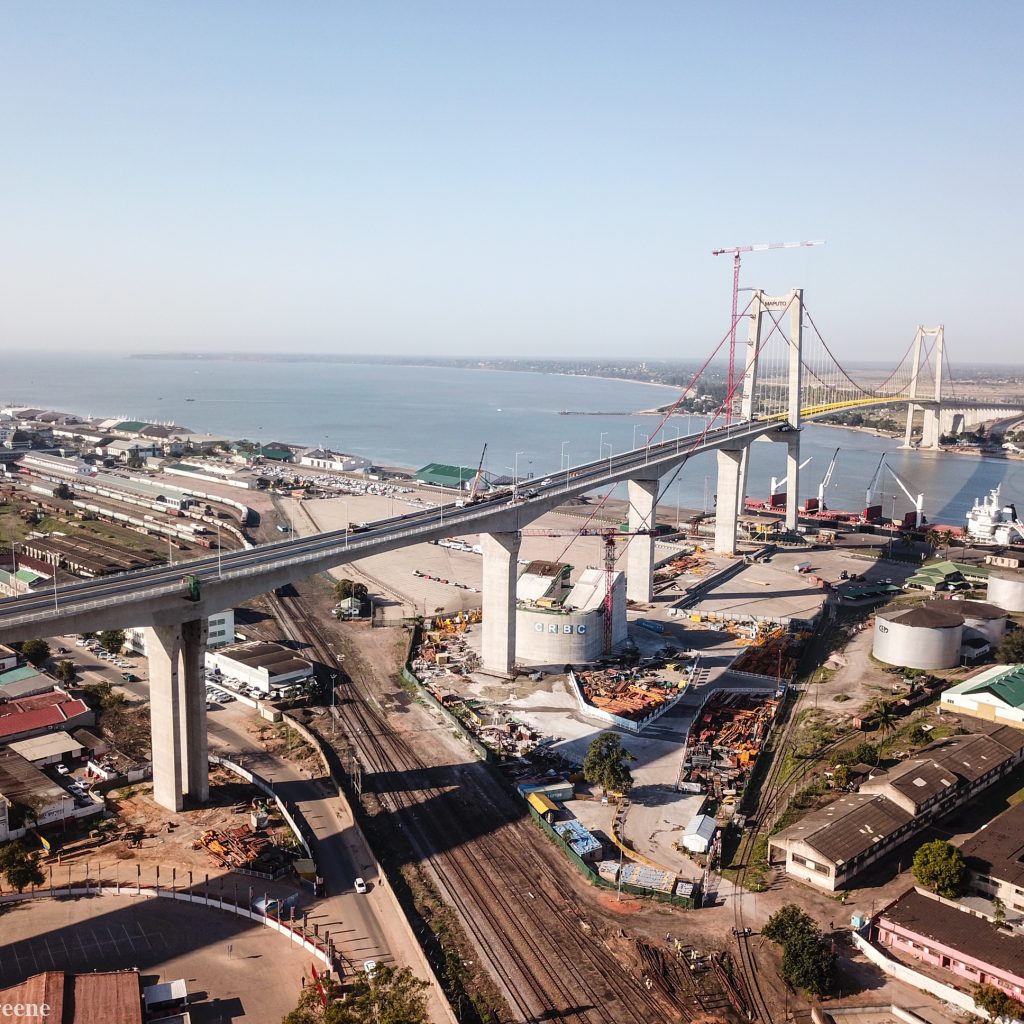
The Maputo Bridge, now the longest suspension bridge in Africa, with 3,300 m of connecting bridge structures, required a very specific and durable building material – concrete that would not only meet the 100-year design life mandated by the Mozambican Government but be visually acceptable and as sustainable as possible.
This stipulation led to the substitution of up to 40% of the cement with fly ash, leading to what GAUFF calls “fantastic results and the construction of arguably one of the most durable structures on the African continent”.
China Road and Bridge Construction (CRBC) was awarded the Engineering Procurement Construction (EPC) contract for the design and Construction of the Maputo Bridge. A requirement that had a drastic effect on the quality of the overall project was the decision to appoint an internal independent Quality Control consultant. GAUFF Engineering – a German company with head offices in Nuremburg and over 40 years of experience in Africa – was appointed to this position.
Furthermore, the decision to utilise fly ash, available in abundance from South Africa, and the fact that it was decided to use local cement from Cimentos de Mozambique (CM), made controlling the integral components of the concrete much easier.
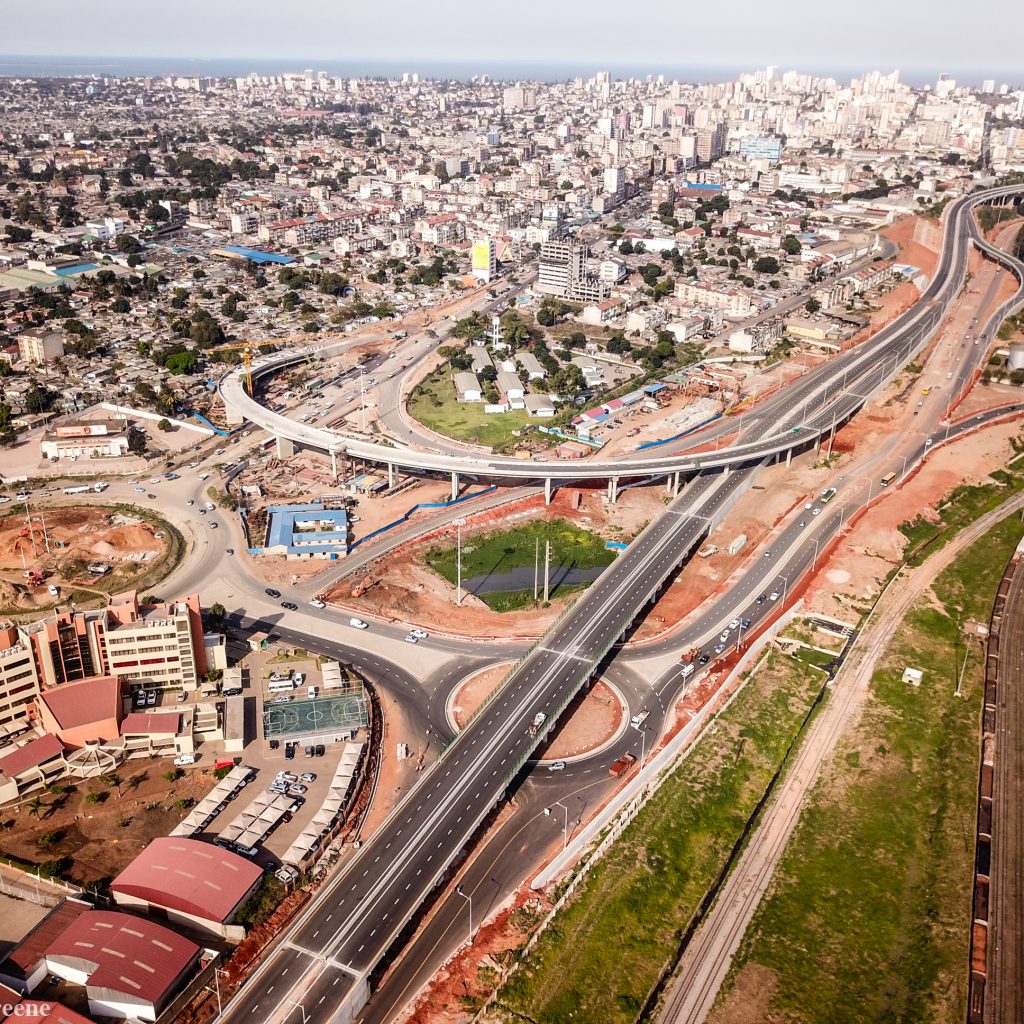
The now highly-acclaimed Maputo Bridge project is made up of two 140-m-tall reinforced concrete pylons and two 170,000-t anchor blocks that support the suspension bridge. Also included are three kilometres of connecting viaducts constructed from precast post-tensioned T-beams in the south and a composite structure in the north consisting of T-beams as well as in-situ cast post-tensioned box girders. These were constructed utilising the balanced cantilever method as construction took place over an extremely active industrial area.
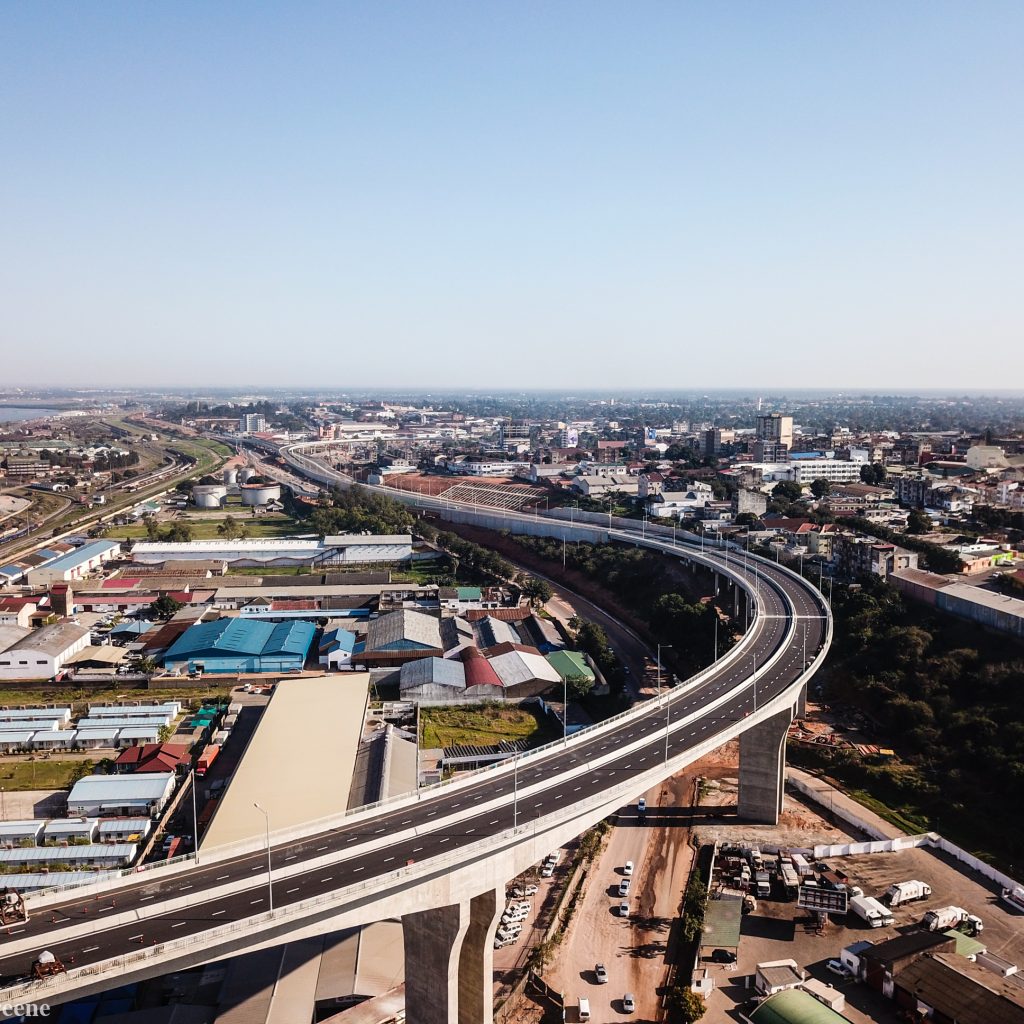
In total, over 340,000 m3 of concrete were cast. To put this into layman’s context, this is equivalent to a rugby field of solid concrete – 50m high. It called for a staggering 850,000 fifty-kilogram bags of cement.
Both sides of the bay were equipped with computerised 120-m3/hour batch plants, each with individual chiller plants to cope with the high temperatures often experienced in Maputo.
Aggregate in the form of Rhyolite and Dolerite was sourced from Namacha about 50 km away – the only area in the whole of southern Mozambique where suitable aggregate was available. Sand was sourced from the Mohamba River: the river’s coarse-graded sand was compensated for by the very fine fly ash.
For the various structures involved in the project, over 300 piles were constructed varying in depth from 110 m for the pylons to an average depth of 50 m for the overall project. This required a very workable self-compacting concrete, so 21 mix designs were done to facilitate the different requirements for individual structures and components. Design strengths varied from 20 MPa to 50 MPa for the pylons, T-beams, box girders, piers, piles, crash barriers, curbing and hydraulic structures
Cement (CEM II A-L42.5 N) was supplied by Cimentos de Mozambique (CM). This is a portland limestone cement comprising between 80-94% clinker and between 6-20% limestone with the capacity to produce cement strengths between 42.5 MPa and 62.5 MPa. Two different manufacturers from South Africa were used to supply the project with fly ash to induce pozzolanic activity in the cement. All the fly ash supplied conformed to SANS 50450-1:2011 requirements for concrete.
The advantage of the addition of fly ash in the range of up to 40% of the total cementitious materials for the fresh concrete was improved workability and lower water requirement for a given slump while slightly retarding the setting time. For the hardened concrete, the main advantages were a significant decrease in CO₂ₑ emissions, strength development with age, and lower production costs.
Other improvements included the reinforcement’s resistance to chloride attack, improved sulphate resistance, refinement of pore structure, reduction of permeability, prevention and retardation of the alkali-silica reaction, reduction of heat generation caused by hydration and a reduction in the risk of thermal cracking that could possibly have taken place during the casting of the three anchorage bases. Internal cooling systems utilising pumped cooled water were extensively used throughout the project.
Two of the unique aspects of the concrete on this project were the addition of up to 40% fly ash or pulverised fuel ash (PFA) and a specially formulated polycarboxylate superplasticiser supplied by Chinese company, Sobute New Materials Co. Ltd. This not only offered immediate cost savings (7%) but also long-term benefits.
The PFA, sourced from South Africa, enabled the concrete to achieve much higher long-term strength gains, and the fineness of the PFA contributed to the concrete being less permeable, producing a very durable concrete, since the river sand – as previously stated – lacked fines. An additional benefit of the PFA was an estimated 20% reduction in heat produced.
The water-reducing superplasticiser was particularly important because of the casting to extreme depths and heights which necessitated a highly workable (200-230 mm slump) concrete with good flow characteristics and delayed setting time.
The water reduction and ion exchange effect of the superplasticiser, combined with the fly ash, greatly contributed to the durability and strength of the concrete – confirmed by the University of Cape Town’s Concrete Materials & Structural Integrity Unit which tested samples cored from the bottom slab of the anchorage six months after casting. The UCT report stated that the result of the cores tested was the best yet obtained from site-manufactured concrete tested at its facility up to 2016.
Although the durability indexes did not form part of the employers’ requirements and the cost was borne by the contractor, it was bilaterally decided to do index testing on concrete of varying ages to confirm that substituting cement with fly ash did indeed improve not only the strength with age factor, but also played a major contribution in increasing the durability of the structure to guard against the harsh marine environment.
For this project, GAUFF and CRBC together with the client developed a comprehensive quality management monitoring system, which covered all aspects of construction in Maputo and also the extensive production of the complex steel components that were manufactured in China.
The project’s massive workforce (peaking at 2,370) included Mozambicans and Chinese staff, with the quality control engineering and supervision staff totalling 36. In total, 14,526, 940 man-hours were recorded on the project until the end of October 2018 with thousands of households benefitting financially through employment and skills transfer – factors that will have a lasting effect on the local community. More than 600 families were relocated out of poor environmental conditions and given title deeds to their own serviced plots and financially rewarded, enabling them to construct personal homes.
In response to worldwide interest in this project – and its exceptional concrete characteristic and properties – technical papers have been presented at several high-ranking conferences in many countries with the interest mainly generated by the extensive use of fly ash and exceptional durability test results obtained from the concrete cover layer of different construction elements.
The University of Johannesburg’s Facility of Engineering & Built Environment also visited the bridge and GAUFF Engineering has been asked for input at conferences and by various international publications.
Mozambicans can truly be proud of a masterpiece of infrastructure engineering that will dominate the skyline of Maputo forever and be a global construction landmark and achievement for the entire southern part of the African continent.
(Input provided by GAUFF Engineering’s Lawrence Greene, Section Head; and Dean Swanepoel, Quality Manager & Senior Materials Engineer for the Maputo Bridge and Link Roads Project.)


