

GAUTRAIN LOOKS AT EXPANDING NON-FARE REVENUE WITH CENTURION PILOT PROJECT
While “doing okay” in terms of non-fare revenue from advertising, the “one big trick” the Gautrain system has missed out on has been to participate in the rise in property value around Gautrain stations, says Gautrain Management Agency (GMA) COO William Dachs.
Since the establishment of the Gautrain in 2010, property prices around some of the stations have grown significantly.
Property analyst company Lightstone says property prices close to the Rosebank station achieved an additional 2.5% growth compared with prices for property in the surrounding areas.
“If we are given the go-ahead for the Gautrain expansion project, we will be talking about property rights around the stations,” says Dachs. “It is the single biggest non-fare revenue source we can possibly get.”
Governments worldwide have been using various mechanisms for capturing its share of the rise in land values as a result of public infrastructure investments.
Many economists suggest that cities could benefit by funding transit system development costs, as well as a major portion of operating costs, from land value capture, by taxing a portion of the rise in value of adjacent properties that result from transit accessibility.
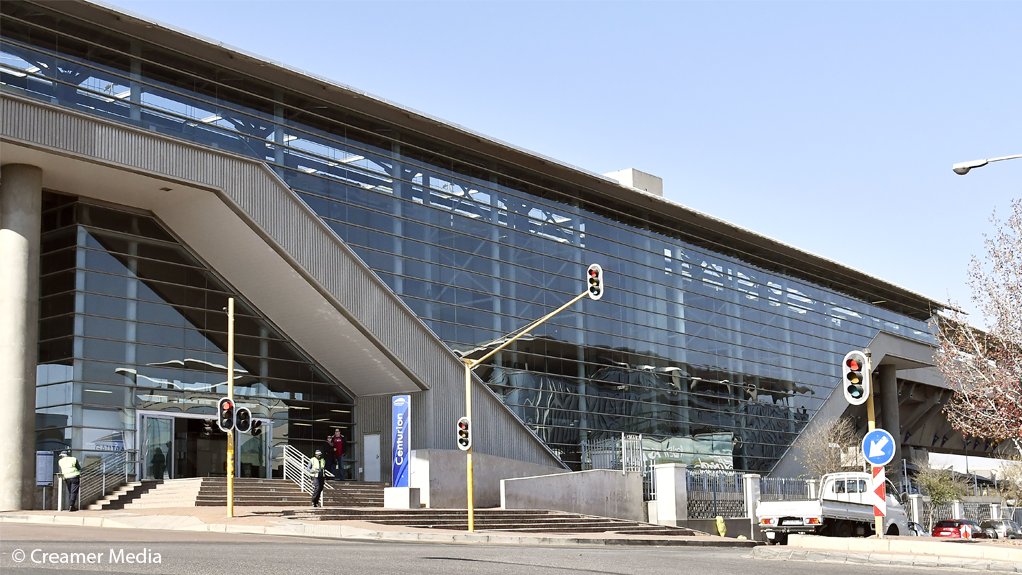
Dachs says the GMA is currently engaging with the City of Tshwane and a number of property developers to see how to guide development around the Centurion station to everyone’s benefit – including the GMA.
The Centurion Gautrain station opened in 2012 when the area around the station was mainly low density housing, with some commercial buildings along West avenue, explains Dachs.
“The Gautrain station quickly became a park-and-ride station. Most commuters simply drove to the station, parked, got on the train and then did the reverse in the evening without spending any time in the station precinct.
The result was that the Gautrain parking quickly filled up, with more parking space required.
The GMA discussed with the City of Tshwane its need for more space and how this could be managed so that future developments around the station could be much denser, and with multipurpose uses.
The end result was that the Gautrain was allowed to develop around 1 700 at-grade parking bays north of the station, while the city and GMA would cooperate in projects to achieve the desired denser development, thereby giving effect to what is known as transit-oriented development (ToD) – where more people spend more time either in their homes, offices or in retail spaces, explains Dachs.
This has led to the establishment of a working group comprising the City of Tshwane, the GMA, Bombela and all the major developers active in the Centurion station area.
“The working group is first looking at quick wins in terms of making the precinct far more pedestrian friendly, improving access and encouraging longer stays by commuters in the area,” notes Dachs.
The GMA has already invested in upgrading intersections around the station.
“The intention is to develop a station precinct plan that looks at all available areas and puts forward a coherent strategy for ToD development,” says Dachs. “The final stages will be implementing the developments by developers.
A 2018 World Bank study of 32 metro systems indicates there is not one public transport system that does not require public funding.
The South African government pays a ‘patronage guarantee’ to the Bombela Concession Company (BCC), as the Gautrain operator, with this guarantee reaching around R1.5-billion for the 2017/18 financial year.
“New metro lines cost more money to build and operate than can be recouped from fares, but operational expenditure, including renewal, can be self-sustaining if fares are sufficient and there is a good level of non-fare revenue,” says Dachs.
For the past three years, Gautrain revenue has been between 90% of 105% of operating costs. This, however, excludes maintenance and refurbishment costs.
The Gautrain expansion project will happen in five phases, and will add 146 km of rail and 19 new stations to the current 80-km, ten-station network. It should take between 30 and 40 years to complete all five phases.
It is expected that the Gautrain expansion project could create 211 000 jobs over all the phases, with R19-billion to be spend on black-owned entities and R79-billion on local goods.
Phase 1 will go from the current Marlboro station, via Sandton, to Randburg, Cosmo City and Little Falls.
It will add around 25 to 30 km rail to the current network, as well as three new stations and a new tunnel linking through to Marlboro.
Phase 2 should link Jabulani, in Soweto, to the Gautrain system.
The GMA is currently awaiting National Treasury’s nod of approval for the expansion project.
“I think the signs are positive,” says Dachs.
The Gautrain currently runs around 6 800 trains a month, with 99% availability, 98% punctuality and a 100% passenger safety record. https://www.engineeringnews.co.za/article/gautrain-looks-at-expanding-non-fare-revenue-with-centurion-pilot-project-2019-07-01


