

CONTRACT AWARDED FOR LHWP II’S POLIHALI DIVERSION TUNNELS
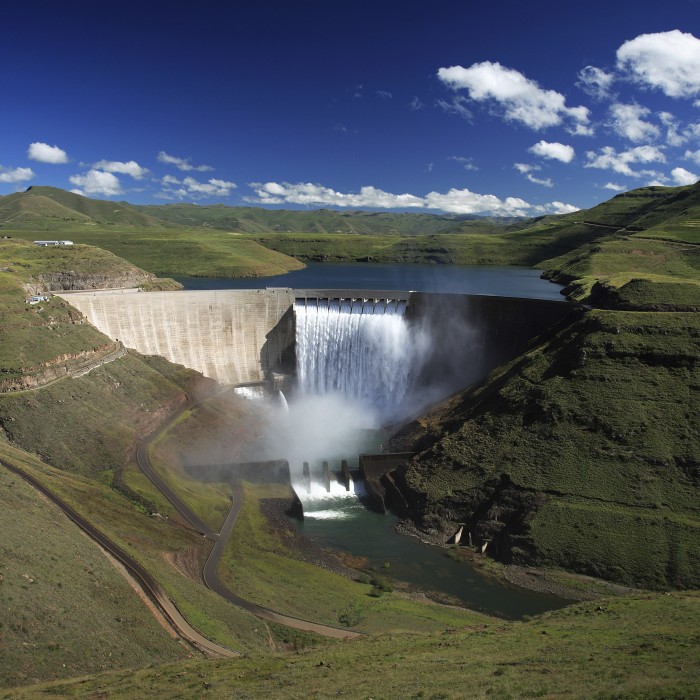
The Lesotho Highlands Development Authority (LHDA) has awarded the contract for the construction of the Polihali diversion tunnels to the SCLC Polihali Diversion Tunnel joint venture (JV), marking another significant step in the implementation of Phase 2 of the Lesotho Highlands Water Project (LHWP II).
The contractor is expected to be on site in April, with the works expected to be completed in about 18 months. The project cost is estimated at M517-million.
The SCLC Polihali Diversion Tunnel JV comprises the South African branches of Salini Impregilo, Cooperativa Muratori Cementistri CMC di Ravenna and CMI Infrastructure, as well as Lesotho-based LSP Construction.
“The diversion tunnels are essential to facilitate the construction of the Polihali dam. Their construction is an important element of the advance infrastructure works, which started towards the end of 2018 with the awarding of the contracts for the Polihali North East access road and the civils work at Katse and Mokhotlong,” says LHDA divisional manager for the LHWP II Tente Tente.
He points out that the advance infrastructure will largely be completed prior to the start of con-struction of the Polihali dam and the Polihali to Katse water transfer tunnel.
In the case of the Polihali dam, two diversion tunnels will be built to divert water from the Senqu river. In building two tunnels, its capacity to carry floods will increase and will provide flexibility to work in one tunnel while the river flows in the other one.
The tunnels – one 7 m in diameter and almost 1 km long and the other 9 m in diameter and almost 1 km long – run parallel to each other from the intake point to the outlet downstream of the dam.
The tunnels will be excavated by drill and blast method and will be supported by rockbolts and shotcrete, as required.
The Metsi a Senqu-Khubelu Consultants JV designed the diversion tunnels and will also supervise the construction work.
LHWP II builds on the successful completion of Phase I in 2003, which delivers water to the Gauteng region of South Africa and uses the water delivery system to generate hydroelectricity for Lesotho.
The project will increase the current supply rate of 780-million cubic metres a year to over 1.27-billion cubic metres a year.
The electricity generation capacity will also increase and is a further step in securing an independent electricity source to meet Lesotho’s domestic requirements.https://www.engineeringnews.co.za/article/contract-awarded-for-lhwp-iis-polihali-diversion-tunnels-2019-04-18


